Need a Flatbed Right Now? Skip the Reading — We're Available 24/7. Call Now: +971 52 909 1650
Flatbed towing carries your vehicle fully off the ground on a flat trailer bed, so no wheel ever touches the road during transport. It's the method we reach for whenever a car is damaged, non-running, low to the ground, or simply too valuable to risk on a standard tow. Available anywhere in Dubai, any time of day or night.
Not every vehicle should be towed with two wheels down. A car with accident damage, a seized wheel, all-wheel drive, or barely any ground clearance can pick up further damage from a standard tow — sometimes worse than whatever caused the problem in the first place. Flatbed towing removes that risk entirely by lifting the whole vehicle off the road.
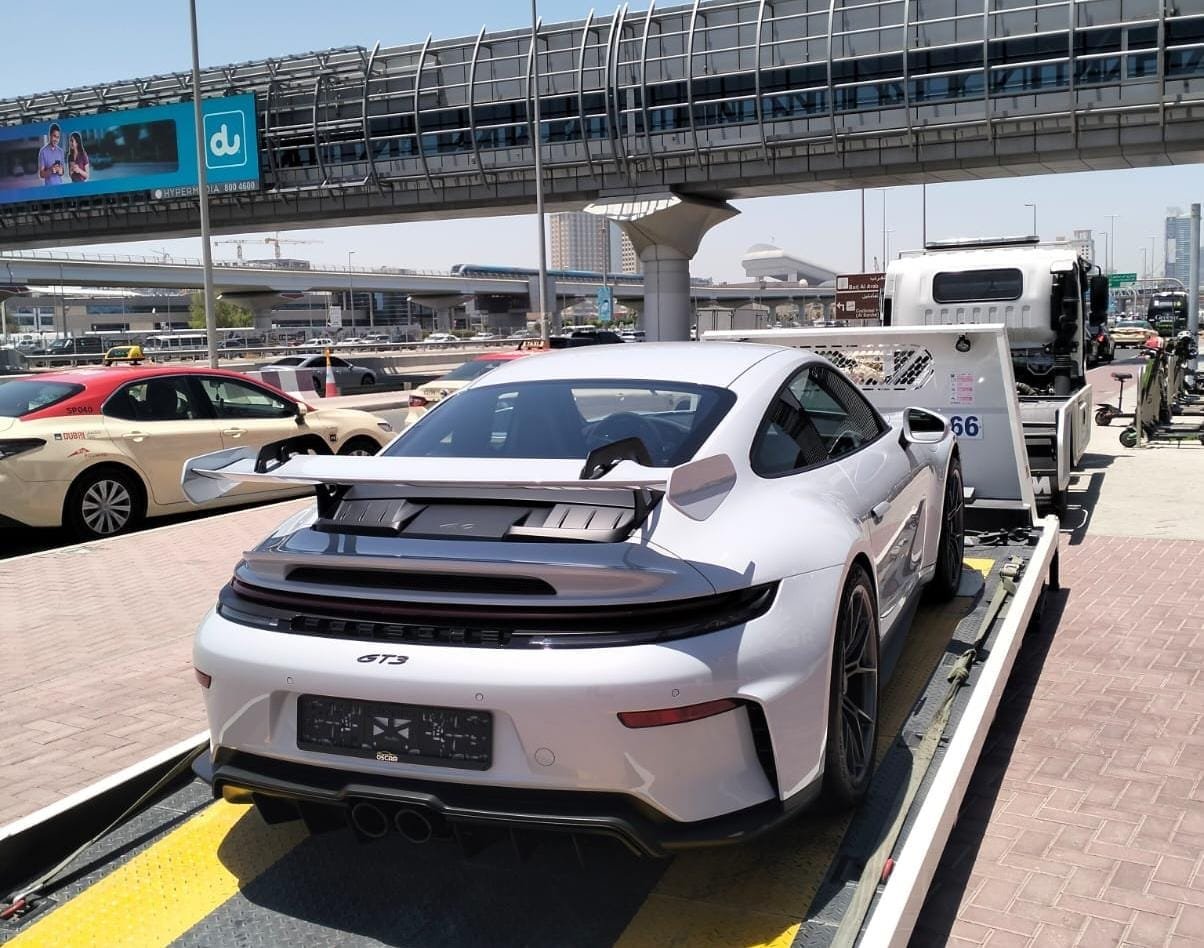
It's also the method most owners of luxury and performance vehicles specifically ask for, since it avoids any contact between the car and the road surface — no dragging, no scraping, no strain on a drivetrain that was never designed to be pulled.
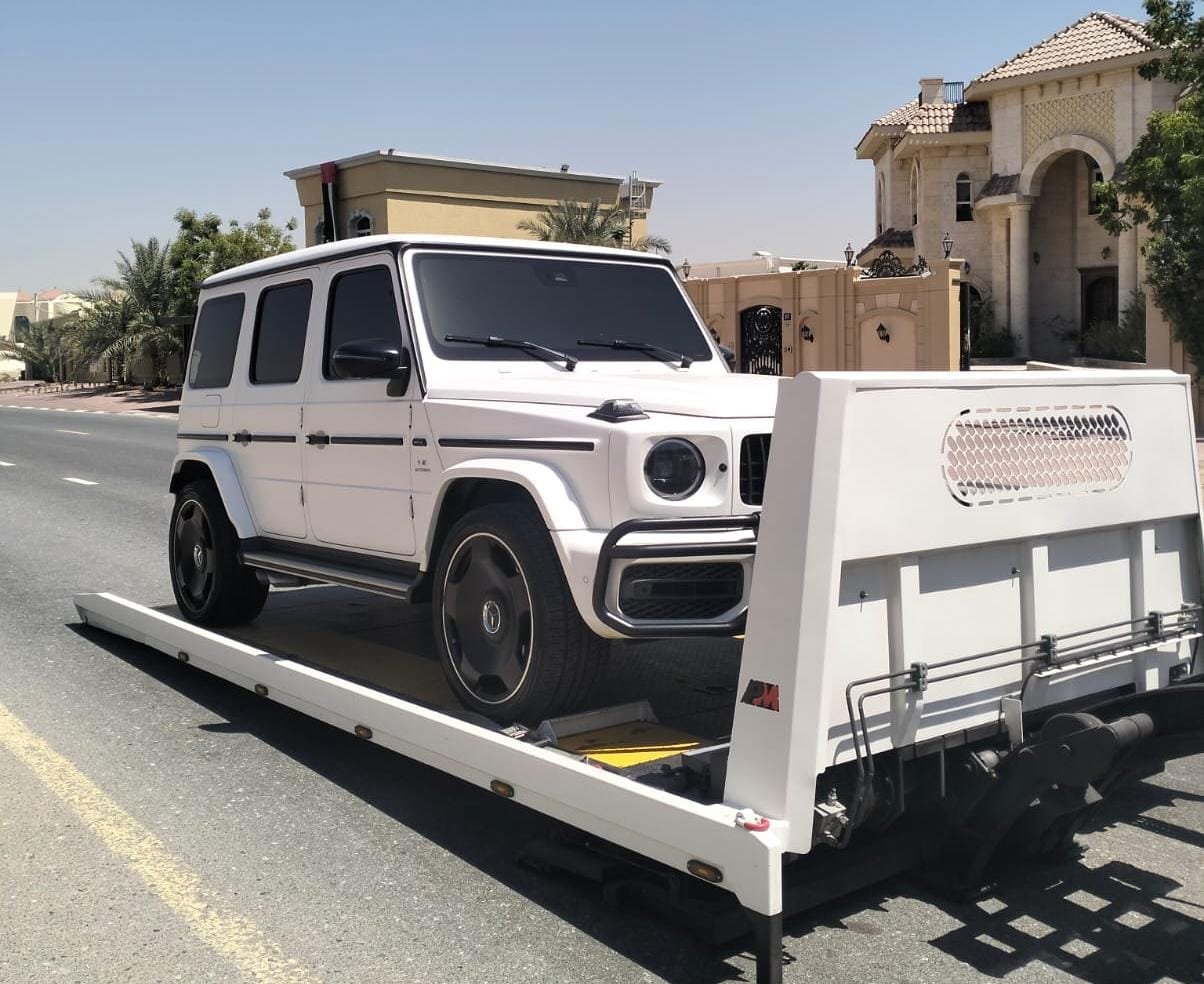
A flatbed tow truck carries a flat, level trailer bed that can be lowered to the ground at an angle, forming a ramp. If your car can still roll, steer and brake, it's driven straight up onto the bed under its own power.
If it can't move safely on its own — because of accident damage, a mechanical lock-up, or a wheel that won't turn — a winch cable is attached and the vehicle is pulled up slowly and under full control, without anyone needing to sit inside it.
Once in position, the bed is raised level and the wheels are strapped down at multiple points. This keeps the car completely still for the whole journey, whether that's a short trip across town or a longer transfer to a dealership or workshop.
Book Flatbed Towing
A bent wheel, damaged suspension or misaligned frame can make a standard tow unsafe or impossible.
If the transmission can't be shifted to neutral or the wheels won't turn freely, flatbed avoids strain on the drivetrain.
Sports cars and lowered vehicles risk scraping a front splitter or undertray during a standard tow.
Owners often prefer flatbed transport simply to keep the vehicle completely off the road surface.
Whether all four wheels turn freely and the steering responds normally.
Lowered, sporty or low-slung vehicles are safer lifted fully off the road.
All-wheel drive vehicles generally need flatbed transport to avoid drivetrain damage.
Longer transfers across the city add more reason to keep the vehicle fully off the road.
Move to a safe area away from traffic if the vehicle can still shift a short distance, and switch on your hazard lights so you're visible to other drivers.
Remove any loose exterior fittings — roof boxes, bike racks, or anything not permanently fixed — so nothing shifts or catches during loading.
Have your exact location and preferred destination ready when you call. If you know the fault — a flat tyre, a warning light, an accident — mention it, since it helps our team bring the right loading approach from the start.
Call Us Now
The vehicle stays on its own wheels, either hitched behind the truck or with its front or rear wheels lifted. Works well for cars that roll, steer and brake normally.
The entire vehicle is loaded onto a flat trailer bed, with all four wheels off the ground. The safer option for damaged, non-running, low-clearance or high-value vehicles.
Not sure which your car needs? Describe the situation when you call and we'll confirm the right method before we dispatch.
Not sure if your vehicle needs a flatbed? Describe it when you call and we'll confirm before dispatching.
If your car can still roll, steer and brake normally, our standard car towing service may be all you need, and our wider towing service covers both methods depending on the job. For a vehicle that's stuck rather than damaged, our car recovery service is the better fit, and for engine or mechanical breakdowns, see breakdown recovery. Still unsure? Contact us and we'll advise.
"Insisted on flatbed for my sports car and they didn't hesitate. Strapped it down carefully and it arrived at the showroom without a mark."
"After a fender bender my wheel was locked up. They explained why a standard tow wasn't an option and loaded it onto a flatbed instead."
"My AWD car needed flatbed transport and I had no idea why until they explained the drivetrain risk. Professional and clearly experienced."
Flatbed towing is when a vehicle is driven or winched fully onto a flat trailer bed and secured for transport, rather than being hitched and pulled with its wheels still on the road. All four wheels are off the ground for the entire journey.
Flatbed towing is the safer choice for vehicles with accident damage, a non-turning wheel, low ground clearance, all-wheel drive, or a transmission that can't be put in neutral. It's also preferred for luxury and sports cars where owners want to avoid any wear from road contact.
If the vehicle can roll, it's driven up a ramp onto the bed. If it can't, a winch pulls it on gently and under control. Once positioned, the wheels are strapped down at multiple points so the car can't shift, slide or bounce during the drive.
Yes — for many luxury and sports cars, flatbed is actually the recommended method. Low front splitters, wide wheels, and performance suspension setups are often better protected on a flatbed than being pulled with two wheels down.
Yes. Accident-damaged vehicles are one of the most common reasons for flatbed towing, since a bent wheel, damaged suspension, or misaligned frame can make a standard tow unsafe or impossible.
Move to a safe area away from traffic if you can, turn on your hazard lights, remove any loose items from the exterior (like roof boxes or bike racks), and have your exact location and destination ready when you call.
Yes. Tell our team the garage, dealership, showroom or address you want when you call, and the vehicle is transported directly there.
Yes, our flatbed towing service operates around the clock, including nights, weekends and public holidays, anywhere in Dubai.